Onward
Mariners' Museum, Uncurated Search Results
Type: Skipjack
Year: 1896
Builder:
Location: Unlocated - Harrison
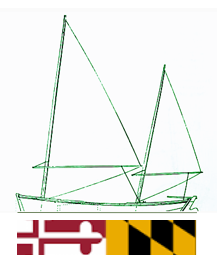
These records are found in the online catalog of The Mariners’ Museum and Park in Newport News, Virginia. Uncurated search results are presented to give researchers and interested readers an idea of whether the museum’s archives contain information about this vessel and whether it may be worthwhile to visit the museum’s catalog search page for further investigation. Uncurated results may be inaccurate or incomplete.
Search mode: Exact Name. Search phrase(s): "Onward". Results returned: 35. Results displayed in this table: 35.
Use these buttons to send uncurated search results to your own app or text document for further research. First, check the box for any row, or click "Select All" then uncheck any rows. Then click "Show Selections". You can then copy your selections from the text box and past them into your app.
| Fetch? | Row ID | Media | Date | Vessel | Place | Related Places | Inscription/Marks | Subject | Notes | Archive Number |
|---|---|---|---|---|---|---|---|---|---|---|
| 1 | No image URL. | Onward voyage. | LB95945 | |||||||
| 2 | No image URL. | Warships, British–New Zealand (2nd of the name); Jutland, Battle of, 1916 | Cover title. | LB27826 | ||||||
| 3 | No image URL. | Onward | P0001.011/01-2350 | |||||||
| 4 | No image URL. | Onward and upward. | LB62686 | |||||||
| 5 | 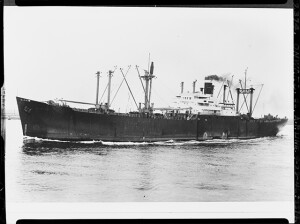 | 9/23/1946 | Onward (Steamship : 1945). | 2374. Onward. US. A.P. Line. 9-23-46. #2374. | Ships.; Bodies of water. | Copy print of a photograph of the Onward. Broadside view of the ship in midstream. | P0006/02.01-02.1709#01 | |||
| 6 | 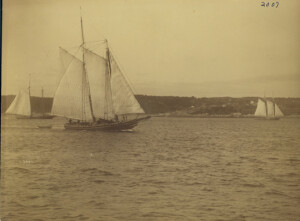 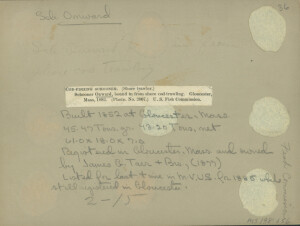 | 1882 | USA; MASSACHUSETTS; GLOUCESTER | INSCRIPTION: PAPER LABEL ON BACK OF MOUNT: COD-FISHING, (SHORE TRAWLER) SCHOONER ONWARD, BOUND IN FROM SHORE COD-TRAWLING, GLOUCESTER, MASS 1882 (PHOTO. NO. 2007) U.S. FISH COMMISSION. | CURATOR NOTES: Starboard side view of schooner underway. ALBERT BARNES COLLECTION. | MS0198/01-06.12#56 | ||||
| 7 | No image URL. | Steamboat lines–History. Atlantic Provinces; Shipping–History–Atlantic Provinces; Compagnies de navigation–Histoire–Provinces de l'Atlantique; Transports maritimes–Histoire–Provinces de l'Atlantique | East coast panorama : __the history of shipping companies on Canada's east coast from 1900 onward __by J.P. Andrieux | LB16988 | ||||||
| 8 | 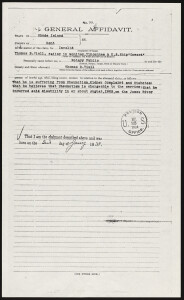 | Before 1992 | Monitor (Ironclad : 1862).; Vincennes (Sloop-of-war : 1861).; Onward (Ship : 1862). | James River (Va.). | Rheumatism.; Sailors–History–19th century. United States; Disabled veterans–Civil War, 1861-1865. United States | Photocopy of a general affidavit signed by Thomas B. Viall declaring his physical ailments and resulting disabilities, which he claimed that he incurred while on duty on the James River. | MS0164.001/01-001.32#01 | |||
| 9 | 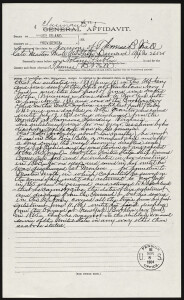 | Before 1992 | Onward (Ship : 1862).; Monitor (Ironclad : 1862).; Vincennes (Sloop-of-war : 1861).; Ohio (Ship-of-the-line : 1846).; North Carolina (Ship-of-the-line : 1837).; Bella (Brig : 1857). | Sailors–History–19th century. United States; Military pensions–Civil War, 1861-1865. United States | Photocopy of a one-page general affidavit for the pension claim of Thomas Viall. It details his service record during the American Civil War, during which time he served on the US ships Ohio, Vincennes, North Carolina, Monitor, and Onward. He also served aboard a merchantman, the brig Bella. The original document was undated; it was stamp as received by the Pension Office on November 8, 1904. | MS0164.001/01-001.32#03 | ||||
| 10 | 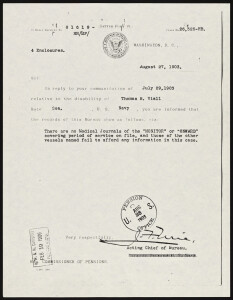 | Before 1992 | United States. Navy–Personnel records.; Onward (Ship : 1862).; Monitor (Ironclad : 1862).; United States. Navy Department. Bureau of Medicine and Surgery–Records and correspondence. | United States–History–Veterans. Civil War, 1861-1865 | Medical records. | Photocopy of a letter from the acting chief of the Bureau of Medicine and Surgery to the Commissioner of Pensions regarding the disability and pension claim of Thomas B. Viall. It states that the surgeon's logs for the Monitor the Onward were not saved for Viall's period of service, and those of other vessels yield no information about his condition. | MS0164.001/01-001.32#06 | |||
| 11 | 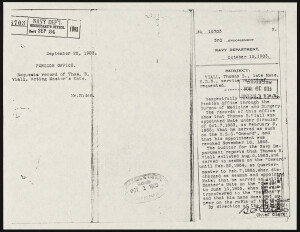 | Before 1992 | Onward (Ship : 1862).; Vermont (Ship-of-the-line : 1862).; United States. Navy–Personnel records. | United States–History–Veterans. Civil War, 1861-1865 | Sailors–History–19th century. United States | Photocopy of a one-page circular letter from the Bureau of Pensions to the Navy Department, requesting records for Thomas B. Viall, Acting Master's Mate. The Navy Department's response, from chief clerk of the Navy Department, is dated October 19, 1903. The letter provides a service history of Viall on Onward in 1865. | MS0164.001/01-001.32#09 | |||
| 12 | 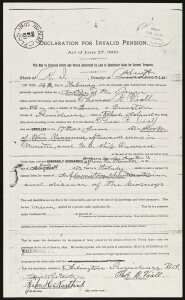 | Before 1992 | Vincennes (Sloop-of-war : 1861).; Monitor (Ironclad : 1862).; Onward (Ship : 1862). | Military pensions–Civil War, 1861-1865. United States; Disabled veterans–Civil War, 1861-1865. United States | Photocopy of a pension declaration signed by Thomas Viall, dated February 14, 1891. It details his physical disabilities and states that he served aboard Vincennes, Monitor and Onward. | MS0164.001/01-001.32#11 | ||||
| 13 | No image URL. | Before 1992 | Vincennes (Sloop-of-war : 1861).; Monitor (Ironclad : 1862).; North Carolina (Ship-of-the-line : 1837).; Ohio (Ship-of-the-line : 1846).; Onward (Ship : 1862). | Medical records. | Photocopy of a two-page circular letter to the Bureau of Navigation from the Pensions Bureau and their response. The initial letter, dated July 29, 1903, requests a full naval history and personal description of Thomas Viall. The response, dated August 22, 1903, provides the information sought pertaining to Viall and his service aboard Ohio, Vincennes, North Carolina, Monitor and Onward. | MS0164.001/01-001.32#08 | ||||
| 14 | 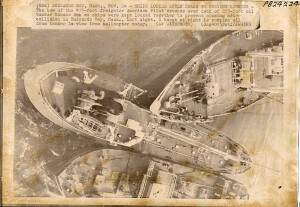 | November 4, 1965 | USA; MASSACHUSETTS | CURATOR NOTES: View of collision of AMERICAN PILOT and MAUMEE SUN (tanker) in Buzzards Bay G- Daily Press. Alternate Name: Onward, Pioneer Gulf. | P0001.003/01-#PB24224 | |||||
| 15 | No image URL. | Before 1992 | Onward (Ship : 1862).; United States. Navy–Personnel management.; United States. Navy–Personnel records.; Vermont (Ship-of-the-line : 1862). | United States–History–Veterans. Civil War, 1861-1865 | Military discharge.; Sailors–History–19th century. United States | Photocopy of a three-page circular letter from Eugene F. Ware, commissioner of Pensions, to Capt. Samuel W. B. Diehl, Judge Advocate General of the Navy, dated July 19, 1904, and Diehl's response dated September 14, 1904. Ware asks whether Thomas Viall's termination of service was honorable. Despite Viall's failure to report for duty aboard Vermont in July 1865, Diehl, noting Viall's service during the bulk of the Civil War and his attempt to resign from the Navy, responds that his discharge was properly considered honorable. | MS0164.001/01-001.32#10 | |||
| 16 | No image URL. | ADDITIONAL INFORMATION: "Official Records of Union & Confederate Navies", Series II, Vol. I. "List of Vessels of the U.S. Navy from 1797 to 1874". VESSEL INFORMATION-- VESSEL NAME: USS GRAND GULF VESSEL TYPE: wooden screw steamer SERVICE DATES: 1863 VESSEL HISTORY: ONWARD was purchased by the U.S. Government on September 14, 1863 from Cornelius & Richard Poillon from $190,000. Her name was changed to USS GRAND GULF . After use as a war vessel she was sold at public auction on November 30, 1865 at New York to Comstock & Co. Vessel had 11 guns. SHIP OWNERS: Cornelius & Richard Poillon; U.S. Government; C.Comstock & Co. VESSEL DIMENSIONS: 1200 tons ALL SHIP NAMES: (1) ONWARD (1863); (2) USS GRAND GULF (1863-1865); (3) GENERAL GRANT (1865-1869). | CL20601 | |||||||
| 17 | 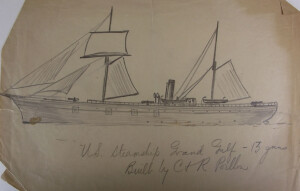 | VESSEL INFORMATION-- VESSEL NAME: USS GRAND GULF VESSEL TYPE: wooden screw steamer SERVICE DATES: 1863 VESSEL HISTORY: ONWARD was purchased by the U.S. Government on September 14, 1863 from Cornelius & Richard Poillon from $190,000. Her name was changed to USS GRAND GULF . After use as a war vessel she was sold at public auction on November 30, 1865 at New York to Comstock & Co. Vessel had 11 guns. SHIP OWNERS: Cornelius & Richard Poillon; U.S. Government; C.Comstock & Co. VESSEL DIMENSIONS: 1200 tons ALL SHIP NAMES: (1) ONWARD (1863); (2) USS GRAND GULF (1863-1865); (3) GENERAL GRANT (1865-1869). | CL22789 | |||||||
| 18 | No image URL. | VESSEL INFORMATION - VESSEL NAME: GENERAL GRANT VESSEL BUILT: 1863 VESSEL TYPE: AMERICAN WOODEN STEAMER BUILDER LOCATION: BROOKLYN, NEW YORK SHIP'S CAPTAIN: E.W. Holmes, Commander Breadth - 35 ft. Depth - 25 ft. 1200 Tons Alternate vessel names: (1) ONWARD (1863); (2) USS GRAND GULF (1863-1865); (3) GENERAL GRANT (1865-1869). | CL19350 | |||||||
| 19 | 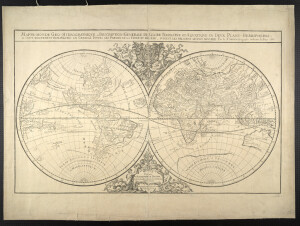 | 1674 | "Par le Sr. Sanson Geographe Ordinaire du Roy. 1674."; "Presenté A Monsiegnevre le Davphin, Par Son tres-humble, tres-obaisant et tres fidele seruiteur Hubert Iaillot. A Paris joignat les grads Augstins, aux Globes Avec Priuilege du Roy pour uingt Ans. 1674" | World maps. | This map has an ornamental cartouche supported by two mermen. It depicts a world map in two hemispheres; an ornamental piece with coat of arms and two cherubs on sea monsters in top center. This copy is likely from Plate II, based on the use of "v" for "u" throughout the text. It may pre-date plate I. Initially published separately, Jaillot's map was incorporated in his Atlas Nouveau from 1681 onward. | MSM 1/-#0088 | ||||
| 20 | 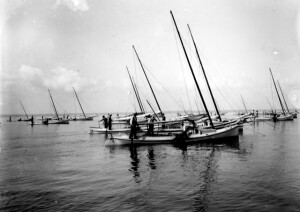 | 5/1961 | The photo depicts about a dozen and a half log canoes at anchor. The log canoe is a type of sailboat developed in the Chesapeake Bay region. Based on the dugout, it was the principal work boat of the bay until superseded by the bugeye and the skipjack. However, it is most famous as a racing sailboat, and races continue to be held. The history of the log canoe is closely tied to the development of the oystering industry on the bay. In pre-power days, the log canoe was an inexpensive craft which could be assemble without recourse to shipbuilders; before the dredge was made legal in 1865, the log canoe was sufficient to the needs of oyster tongers. It did not have the pulling power necessary for dredging, however, its log construction was combined with characteristics of other vessels to form the first bugeyes, a much larger and more powerful vessel. As motor power became available, watermen who were not dredging gradually abandoned sail power; also, the supplies of suitable timber were gradually exhausted. Log canoes were often converted to motor power, and new work boats (such as the Chesapeake Bay deadrise) were motored from the start and used frame construction instead of logs. Many of the existing log canoes have suffered some conversion of this sort during their lifetimes. Over the same period, however, the ad-hoc racing of canoes evolved into a semi-formal sport, and boats began being purpose-built for racing. From 1885 onward various clubs and associations sponsored organized races. This continues to the present, and racing canoes have been built as recently as 1974. | P0001.009/01-#PI0491 | ||||||
| 21 | 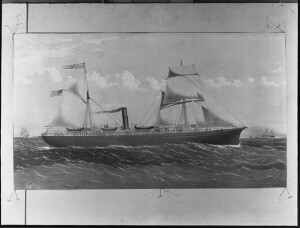 | 1883-1931 | General Grant (Screw steamer : 1866). | GENERAL GRANT, 1863, Cromwell's New Orleans Line, 1863-1869, ex ONWARD, GRAND GULF | Steamboats–United States. | This is a photograph of painting depicting the starboard side of a steamship under sail. | MS0091/03.02-01#1179 | |||
| 22 | 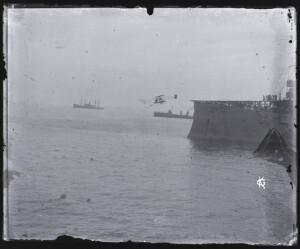 | 1910/11/14 | Birmingham (Scout cruiser : No. 2). | Note with negative: Plate of 1st take off of a plane from a ship-taken by Keville. Eugene Ely's flight from USS Birmingham, 11/14/1910 in Norfolk. Taken by Keville Glennan. | Aeronautics–Flights. | View of the bi-plane just after takeoff. Eugene Burton Ely, a civilian pilot from Iowa, became the first man to take off from the deck of a ship. He flew a Curtiss Model D bi-plane from a platform constructed on the bow of the cruiser USS Birmingham at Hampton Roads, Virginia, on November 14, 1910. Rain and fog threatened to delay the flight, but Ely pressed on. Witnesses saw the daring aviator coast down the platform, drop to the bay, hit the water with a splash, rise again, and continue onward to a safe landing two and one-half miles away on Willougby Spit. Two months later, on January 18, 1911, Ely successfully executed the first airplane landing on a ship, again in a Curtiss airplane. He departed Tanforan Field near San Francisco wearing a padded football helmet and a bicycle tube as a survival vest. Haze obscured his view of the cruiser USS Pennsylvania, anchored in San Francisco Bay. He landed on a specially designed tilted platform at a speed of 40 miles per hour and was slowed to a gentle stop by grappling hooks fitted underneath the aircraft that caught arresting wires attached to sandbags. After a leisurely lunch on board ship, Ely made the world's second nautical takeoff and returned to shore. Following his California success, Ely established a reputation as an expert aviator, publicly demonstrating his skills across the country. His brief but brilliant career was cut short by a tragic crash during a demonstration at the Georgia State Fair on October 19, 1911. Though Ely was a civilian flyer and not part of the naval organization, his flights called attention to the possibilities of aircraft landing and taking off from ships. On February 16, 1933, President Herbert Hoover recognized the significance of Ely's contribution by posthumously awarding him the Distinguished Flying Cross. | MS0235/-#PN6399 | |||
| 23 | 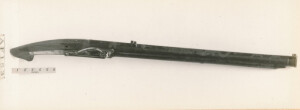 | SHORT DESCRIPTION: This gun is made of wood and metal. It has a matchlock mechanism and a metal tamp, which was unusual (they were commonly made of wood). The underside of the barrel (which is covered by wood) has a maker's mark that tranlates as: Shiraishi-ju (the address), Shiba Tsuji (the family name), Chozaimon Suke Yuki Sake (Chozaimon made it). The top of the barrel has a license mark. NOTES: The European style of gun was introduced to the Japanese in 1542 when Portuguese sailors traded European guns for food. By 1570s, European style guns were common in Japan. The gun called an Oguchi by the Japanese, meaning big mouth. The Japanese "pickled" the steel in the barrel to create a black color (not sure of the chemical compound used), keep the inlay bright and wax the steel. Dull brass was desired over polished brass. Inlay of dragons and butterflies were common designs, and later guns typically have inlaid designs. Makers marks are on about 50% of guns. The Japanese used deer antlers or brass to clean rust off of non-inlaid surfaces. Mekugi nuki is the tool used to remove gun pins. Gun barrels were reused. Larger guns were fired from the hip. External spring or matchlock mechanism is the earlier style but was used into the 19th century. Internal clockwork spring mechanisms show the influence of Dutch 19th-century clocks, imported to Japan, date from 1800. Large numbers of these guns were made in the early 19th century as the Japanese feared invasion. The Japanese stopped making this type of gun about 1855 when more modern European and American gunmaking techniques were introduced into Japan.(Michael Fletcher, expert on Japanese guns 5/28/91). Licensing of the guns was required beginning in 1872 and onward. License numbers were put on older guns. The metal tamp was commonly made of wood. ADDITIONAL INFORMATION: See object file. | CL2689 | |||||||
| 24 | 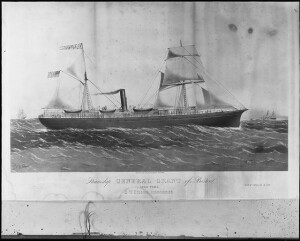 | 1883-1931 | General Grant (Screw steamer : 1866). | "General Grant" (1863-1869), ex "Onward", "Grand Gulf", Cromwell's New Orleans Line | Steamboats–United States. | This is a photograph of printed illustration depicting the starboard side of a steamship under sail. | MS0091/03.02-01#1178 | |||
| 25 | 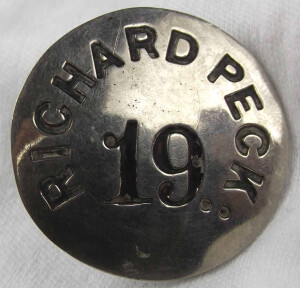 | VESSEL INFORMATION - VESSEL NAME: RICHARD PECK VESSEL TYPE: SCREW STEAMSHIP SHIPBUILDER: HARLAN & HOLLINGSWORTH VESSEL TYPE: TWIN SCREW STEAMER BUILDER LOCATION: WILMINGTON, DELAWARE VESSEL BUILT: 1892 OWNER: NEW HAVEN STEAMBOAT COMPANY, NEW ENGLAND STEAMSHIP COMPANY, PENNSYVANIA RAILROAD VESSEL DIMENSIONS: 303.3 x 48 x 17.9 ALL SHIP NAMES: RICHARD PECK (1892-1943); USS RICHARD PECK (AUXILIARY SHIP: 1943); ELISHA LEE (1943-1953) VESSEL HISTORY: [vessel history from shipscribe.com] The inland passenger steamer RICHARD PECK was built in 1892 for the New Haven Steamboat Co., which operated her in Long Island Sound between New York City and New Haven. The steamer was designed by the American marine artist Archibald Cary Smith. Twin-screw steel-hulled vessel. Improved rail service to New Haven ended the steamship service to this port in 1918, but the ship, now operated by the New England Steamship Company of New Haven, shifted to New London. Worked as a Sound excursion boat until World War II. In 1940 RICHARD PECK was acquired by the Bureau of Yards and Docks for use as a barracks ship during the construction of the Naval Operating Base at Argentia, Newfoundland. She steamed to Argentia between 10 and 18 January 1941. At Argentia she was operated by contractors, Fuller and Co. and Merritt, Chapman, and Scott Corp. The contractors placed on board two 300 KW turbo generators, which allowing her to serve additionally as a floating power plant. On 28 Oct 42 the Commandant of NOB Argentia reported that, since there were now sufficient barracks facilities ashore and since the permanent power system was in full operation, the ship was no longer needed at the base and should be returned to the United States. On the same date the Commandant, 5th Naval District, requested that S.S. STEEL PIER be purchased and converted for use in the transportation of personnel in Chesapeake Bay. On 20 Nov 42 the Auxiliary Vessels Board concluded that STEEL PIER was in too bad condition to be used for any purpose whatsoever but noted that RICHARD PECK was similar in characteristics and recommended substituting her for STEEL PIER to meet the needs of Com-5. BuShips assigned the hull designation IX-96 at this time -- she had had no designation during her period with the Bureau of Yards and Docks at Argentia. RICHARD PECK (IX-96) was placed in commission at Argentia on 20 Feb 43. She was given minimal repairs to make her seaworthy, the outside of the ship was boarded up between the main and promenade decks, and she sailed for Hoboken, N.J, where she completed additional repairs at Todd's Shipyard, Hoboken Division, on 28 May 43 before proceeding onward to Norfolk. Placed in caretaker status at the Naval Operating Base there, she was again repaired at the Norfolk Shipbuilding and Dry Dock Co. between 19 and 28 Aug 43 and between 29 Sep and 5 Nov 43. On 20 Aug 43 the Virginia Ferry Co. and the Pennsylvania Railroad asked to acquire the ship to improve service in the Norfolk-Hampton Roads area in response to requests from the Army and the 5th Naval District. Specifically, she was to replace the VIRGINIA LEE, which the Government had taken over in 1942, in supporting the rail service from New York and Philadelphia through Cape Charles to Old Point Comfort and Norfolk. The railroad planned to spend over a quarter of a million dollars to put the ship in shape. On 23 Sep 43 SecNav authorized BuShips to transfer the ship to WSA for charter to the railroad, and the transaction was carried out on 5 Nov 43. The ship, renamed ELISHA LEE, ferried Pennsylvania Railroad passengers between Norfolk and Cape Charles from 1944 to 1953. | CL13504 | |||||||
| 26 | 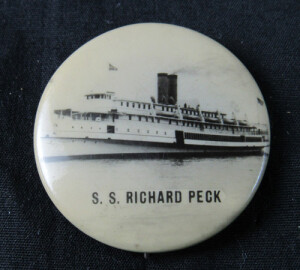 | SHORT DESCRIPTION: Button on pin, on which appears a port bow view of the steamboat RICHARD PECK. VESSEL INFORMATION - VESSEL NAME: RICHARD PECK VESSEL TYPE: SCREW STEAMSHIP SHIPBUILDER: HARLAN & HOLLINGSWORTH VESSEL TYPE: TWIN SCREW STEAMER BUILDER LOCATION: WILMINGTON, DELAWARE VESSEL BUILT: 1892 OWNER: NEW HAVEN STEAMBOAT COMPANY, NEW ENGLAND STEAMSHIP COMPANY, PENNSYVANIA RAILROAD VESSEL DIMENSIONS: 303.3 x 48 x 17.9 ALL SHIP NAMES: RICHARD PECK (1892-1943); USS RICHARD PECK (AUXILIARY SHIP: 1943); ELISHA LEE (1943-1953) VESSEL HISTORY: [vessel history from shipscribe.com] The inland passenger steamer RICHARD PECK was built in 1892 for the New Haven Steamboat Co., which operated her in Long Island Sound between New York City and New Haven. The steamer was designed by the American marine artist Archibald Cary Smith. Twin-screw steel-hulled vessel. Improved rail service to New Haven ended the steamship service to this port in 1918, but the ship, now operated by the New England Steamship Company of New Haven, shifted to New London. Worked as a Sound excursion boat until World War II. In 1940 RICHARD PECK was acquired by the Bureau of Yards and Docks for use as a barracks ship during the construction of the Naval Operating Base at Argentia, Newfoundland. She steamed to Argentia between 10 and 18 January 1941. At Argentia she was operated by contractors, Fuller and Co. and Merritt, Chapman, and Scott Corp. The contractors placed on board two 300 KW turbo generators, which allowing her to serve additionally as a floating power plant. On 28 Oct 42 the Commandant of NOB Argentia reported that, since there were now sufficient barracks facilities ashore and since the permanent power system was in full operation, the ship was no longer needed at the base and should be returned to the United States. On the same date the Commandant, 5th Naval District, requested that S.S. STEEL PIER be purchased and converted for use in the transportation of personnel in Chesapeake Bay. On 20 Nov 42 the Auxiliary Vessels Board concluded that STEEL PIER was in too bad condition to be used for any purpose whatsoever but noted that RICHARD PECK was similar in characteristics and recommended substituting her for STEEL PIER to meet the needs of Com-5. BuShips assigned the hull designation IX-96 at this time -- she had had no designation during her period with the Bureau of Yards and Docks at Argentia. RICHARD PECK (IX-96) was placed in commission at Argentia on 20 Feb 43. She was given minimal repairs to make her seaworthy, the outside of the ship was boarded up between the main and promenade decks, and she sailed for Hoboken, N.J, where she completed additional repairs at Todd's Shipyard, Hoboken Division, on 28 May 43 before proceeding onward to Norfolk. Placed in caretaker status at the Naval Operating Base there, she was again repaired at the Norfolk Shipbuilding and Dry Dock Co. between 19 and 28 Aug 43 and between 29 Sep and 5 Nov 43. On 20 Aug 43 the Virginia Ferry Co. and the Pennsylvania Railroad asked to acquire the ship to improve service in the Norfolk-Hampton Roads area in response to requests from the Army and the 5th Naval District. Specifically, she was to replace the VIRGINIA LEE, which the Government had taken over in 1942, in supporting the rail service from New York and Philadelphia through Cape Charles to Old Point Comfort and Norfolk. The railroad planned to spend over a quarter of a million dollars to put the ship in shape. On 23 Sep 43 SecNav authorized BuShips to transfer the ship to WSA for charter to the railroad, and the transaction was carried out on 5 Nov 43. The ship, renamed ELISHA LEE, ferried Pennsylvania Railroad passengers between Norfolk and Cape Charles from 1944 to 1953. | CL13423 | |||||||
| 27 |  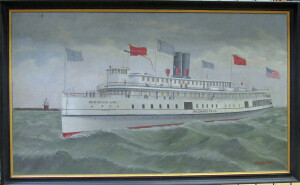 | NOTES: (Julia Korner) Original stretcher, canvas, all flags are new. Inpainting at top and just below all lighthouse, landscape new. Vessel new, dark shading added. VESSEL INFORMATION - VESSEL NAME: RICHARD PECK VESSEL TYPE: SCREW STEAMSHIP SHIPBUILDER: HARLAN & HOLLINGSWORTH VESSEL TYPE: TWIN SCREW STEAMER BUILDER LOCATION: WILMINGTON, DELAWARE VESSEL BUILT: 1892 OWNER: NEW HAVEN STEAMBOAT COMPANY, NEW ENGLAND STEAMSHIP COMPANY, PENNSYVANIA RAILROAD VESSEL DIMENSIONS: 303.3 x 48 x 17.9 ALL SHIP NAMES: RICHARD PECK (1892-1943); USS RICHARD PECK (AUXILIARY SHIP: 1943); ELISHA LEE (1943-1953) VESSEL HISTORY: [vessel history from shipscribe.com] The inland passenger steamer RICHARD PECK was built in 1892 for the New Haven Steamboat Co., which operated her in Long Island Sound between New York City and New Haven. The steamer was designed by the American marine artist Archibald Cary Smith. Twin-screw steel-hulled vessel. Improved rail service to New Haven ended the steamship service to this port in 1918, but the ship, now operated by the New England Steamship Company of New Haven, shifted to New London. Worked as a Sound excursion boat until World War II. In 1940 RICHARD PECK was acquired by the Bureau of Yards and Docks for use as a barracks ship during the construction of the Naval Operating Base at Argentia, Newfoundland. She steamed to Argentia between 10 and 18 January 1941. At Argentia she was operated by contractors, Fuller and Co. and Merritt, Chapman, and Scott Corp. The contractors placed on board two 300 KW turbo generators, which allowing her to serve additionally as a floating power plant. On 28 Oct 42 the Commandant of NOB Argentia reported that, since there were now sufficient barracks facilities ashore and since the permanent power system was in full operation, the ship was no longer needed at the base and should be returned to the United States. On the same date the Commandant, 5th Naval District, requested that S.S. STEEL PIER be purchased and converted for use in the transportation of personnel in Chesapeake Bay. On 20 Nov 42 the Auxiliary Vessels Board concluded that STEEL PIER was in too bad condition to be used for any purpose whatsoever but noted that RICHARD PECK was similar in characteristics and recommended substituting her for STEEL PIER to meet the needs of Com-5. BuShips assigned the hull designation IX-96 at this time -- she had had no designation during her period with the Bureau of Yards and Docks at Argentia. RICHARD PECK (IX-96) was placed in commission at Argentia on 20 Feb 43. She was given minimal repairs to make her seaworthy, the outside of the ship was boarded up between the main and promenade decks, and she sailed for Hoboken, N.J, where she completed additional repairs at Todd's Shipyard, Hoboken Division, on 28 May 43 before proceeding onward to Norfolk. Placed in caretaker status at the Naval Operating Base there, she was again repaired at the Norfolk Shipbuilding and Dry Dock Co. between 19 and 28 Aug 43 and between 29 Sep and 5 Nov 43. On 20 Aug 43 the Virginia Ferry Co. and the Pennsylvania Railroad asked to acquire the ship to improve service in the Norfolk-Hampton Roads area in response to requests from the Army and the 5th Naval District. Specifically, she was to replace the VIRGINIA LEE, which the Government had taken over in 1942, in supporting the rail service from New York and Philadelphia through Cape Charles to Old Point Comfort and Norfolk. The railroad planned to spend over a quarter of a million dollars to put the ship in shape. On 23 Sep 43 SecNav authorized BuShips to transfer the ship to WSA for charter to the railroad, and the transaction was carried out on 5 Nov 43. The ship, renamed ELISHA LEE, ferried Pennsylvania Railroad passengers between Norfolk and Cape Charles from 1944 to 1953. | CL11431 | |||||||
| 28 | No image URL. | VESSEL INFORMATION - VESSEL NAME: RICHARD PECK VESSEL TYPE: SCREW STEAMSHIP SHIPBUILDER: HARLAN & HOLLINGSWORTH VESSEL TYPE: TWIN SCREW STEAMER BUILDER LOCATION: WILMINGTON, DELAWARE VESSEL BUILT: 1892 OWNER: NEW HAVEN STEAMBOAT COMPANY, NEW ENGLAND STEAMSHIP COMPANY, PENNSYVANIA RAILROAD VESSEL DIMENSIONS: 303.3 x 48 x 17.9 ALL SHIP NAMES: RICHARD PECK (1892-1943); USS RICHARD PECK (AUXILIARY SHIP: 1943); ELISHA LEE (1943-1953) VESSEL HISTORY: [vessel history from shipscribe.com] The inland passenger steamer RICHARD PECK was built in 1892 for the New Haven Steamboat Co., which operated her in Long Island Sound between New York City and New Haven. The steamer was designed by the American marine artist Archibald Cary Smith. Twin-screw steel-hulled vessel. Improved rail service to New Haven ended the steamship service to this port in 1918, but the ship, now operated by the New England Steamship Company of New Haven, shifted to New London. Worked as a Sound excursion boat until World War II. In 1940 RICHARD PECK was acquired by the Bureau of Yards and Docks for use as a barracks ship during the construction of the Naval Operating Base at Argentia, Newfoundland. She steamed to Argentia between 10 and 18 January 1941. At Argentia she was operated by contractors, Fuller and Co. and Merritt, Chapman, and Scott Corp. The contractors placed on board two 300 KW turbo generators, which allowing her to serve additionally as a floating power plant. On 28 Oct 42 the Commandant of NOB Argentia reported that, since there were now sufficient barracks facilities ashore and since the permanent power system was in full operation, the ship was no longer needed at the base and should be returned to the United States. On the same date the Commandant, 5th Naval District, requested that S.S. STEEL PIER be purchased and converted for use in the transportation of personnel in Chesapeake Bay. On 20 Nov 42 the Auxiliary Vessels Board concluded that STEEL PIER was in too bad condition to be used for any purpose whatsoever but noted that RICHARD PECK was similar in characteristics and recommended substituting her for STEEL PIER to meet the needs of Com-5. BuShips assigned the hull designation IX-96 at this time -- she had had no designation during her period with the Bureau of Yards and Docks at Argentia. RICHARD PECK (IX-96) was placed in commission at Argentia on 20 Feb 43. She was given minimal repairs to make her seaworthy, the outside of the ship was boarded up between the main and promenade decks, and she sailed for Hoboken, N.J, where she completed additional repairs at Todd's Shipyard, Hoboken Division, on 28 May 43 before proceeding onward to Norfolk. Placed in caretaker status at the Naval Operating Base there, she was again repaired at the Norfolk Shipbuilding and Dry Dock Co. between 19 and 28 Aug 43 and between 29 Sep and 5 Nov 43. On 20 Aug 43 the Virginia Ferry Co. and the Pennsylvania Railroad asked to acquire the ship to improve service in the Norfolk-Hampton Roads area in response to requests from the Army and the 5th Naval District. Specifically, she was to replace the VIRGINIA LEE, which the Government had taken over in 1942, in supporting the rail service from New York and Philadelphia through Cape Charles to Old Point Comfort and Norfolk. The railroad planned to spend over a quarter of a million dollars to put the ship in shape. On 23 Sep 43 SecNav authorized BuShips to transfer the ship to WSA for charter to the railroad, and the transaction was carried out on 5 Nov 43. The ship, renamed ELISHA LEE, ferried Pennsylvania Railroad passengers between Norfolk and Cape Charles from 1944 to 1953. | CL24499 | |||||||
| 29 | No image URL. | Catskill (Ironclad : 1863)–Photographs. | United States–History–Civil War, 1861-1865–Pictorial works. | Generals–United States–Portraits. | This collection consists of twelve Civil War images from the Collection of David Kent. Included are two stereographs of Monitor-class vessels in the James River, nine cartes-de-visite of notable Civil War personages, and one carte-de-visite of a young boy identified by the donor as a "powder monkey." The CDVs for this donation were selected carefully based on known qualities of original prints, as distinguished from post-war reproductions that were generally cropped and vignetted and were lacking in image detail. | MS0311 | ||||
| 30 | No image URL. | VESSEL INFORMATION - VESSEL NAME: RICHARD PECK VESSEL TYPE: SCREW STEAMSHIP SHIPBUILDER: HARLAN & HOLLINGSWORTH VESSEL TYPE: TWIN SCREW STEAMER BUILDER LOCATION: WILMINGTON, DELAWARE VESSEL BUILT: 1892 OWNER: NEW HAVEN STEAMBOAT COMPANY, NEW ENGLAND STEAMSHIP COMPANY, PENNSYVANIA RAILROAD VESSEL DIMENSIONS: 303.3 x 48 x 17.9 ALL SHIP NAMES: RICHARD PECK (1892-1943); USS RICHARD PECK (AUXILIARY SHIP: 1943); ELISHA LEE (1943-1953) VESSEL HISTORY: [vessel history from shipscribe.com] The inland passenger steamer RICHARD PECK was built in 1892 for the New Haven Steamboat Co., which operated her in Long Island Sound between New York City and New Haven. The steamer was designed by the American marine artist Archibald Cary Smith. Twin-screw steel-hulled vessel. Improved rail service to New Haven ended the steamship service to this port in 1918, but the ship, now operated by the New England Steamship Company of New Haven, shifted to New London. Worked as a Sound excursion boat until World War II. In 1940 RICHARD PECK was acquired by the Bureau of Yards and Docks for use as a barracks ship during the construction of the Naval Operating Base at Argentia, Newfoundland. She steamed to Argentia between 10 and 18 January 1941. At Argentia she was operated by contractors, Fuller and Co. and Merritt, Chapman, and Scott Corp. The contractors placed on board two 300 KW turbo generators, which allowing her to serve additionally as a floating power plant. On 28 Oct 42 the Commandant of NOB Argentia reported that, since there were now sufficient barracks facilities ashore and since the permanent power system was in full operation, the ship was no longer needed at the base and should be returned to the United States. On the same date the Commandant, 5th Naval District, requested that S.S. STEEL PIER be purchased and converted for use in the transportation of personnel in Chesapeake Bay. On 20 Nov 42 the Auxiliary Vessels Board concluded that STEEL PIER was in too bad condition to be used for any purpose whatsoever but noted that RICHARD PECK was similar in characteristics and recommended substituting her for STEEL PIER to meet the needs of Com-5. BuShips assigned the hull designation IX-96 at this time -- she had had no designation during her period with the Bureau of Yards and Docks at Argentia. RICHARD PECK (IX-96) was placed in commission at Argentia on 20 Feb 43. She was given minimal repairs to make her seaworthy, the outside of the ship was boarded up between the main and promenade decks, and she sailed for Hoboken, N.J, where she completed additional repairs at Todd's Shipyard, Hoboken Division, on 28 May 43 before proceeding onward to Norfolk. Placed in caretaker status at the Naval Operating Base there, she was again repaired at the Norfolk Shipbuilding and Dry Dock Co. between 19 and 28 Aug 43 and between 29 Sep and 5 Nov 43. On 20 Aug 43 the Virginia Ferry Co. and the Pennsylvania Railroad asked to acquire the ship to improve service in the Norfolk-Hampton Roads area in response to requests from the Army and the 5th Naval District. Specifically, she was to replace the VIRGINIA LEE, which the Government had taken over in 1942, in supporting the rail service from New York and Philadelphia through Cape Charles to Old Point Comfort and Norfolk. The railroad planned to spend over a quarter of a million dollars to put the ship in shape. On 23 Sep 43 SecNav authorized BuShips to transfer the ship to WSA for charter to the railroad, and the transaction was carried out on 5 Nov 43. The ship, renamed ELISHA LEE, ferried Pennsylvania Railroad passengers between Norfolk and Cape Charles from 1944 to 1953. | CL13508 | |||||||
| 31 | No image URL. | NOTES: This bell along with a whistle, NH 0046, where removed from the vessel before it was towed away for scrapping. VESSEL INFORMATION - VESSEL NAME: RICHARD PECK VESSEL TYPE: SCREW STEAMSHIP SHIPBUILDER: HARLAN & HOLLINGSWORTH VESSEL TYPE: TWIN SCREW STEAMER BUILDER LOCATION: WILMINGTON, DELAWARE VESSEL BUILT: 1892 OWNER: NEW HAVEN STEAMBOAT COMPANY, NEW ENGLAND STEAMSHIP COMPANY, PENNSYVANIA RAILROAD VESSEL DIMENSIONS: 303.3 x 48 x 17.9 ALL SHIP NAMES: RICHARD PECK (1892-1943); USS RICHARD PECK (AUXILIARY SHIP: 1943); ELISHA LEE (1943-1953) VESSEL HISTORY: [vessel history from shipscribe.com] The inland passenger steamer RICHARD PECK was built in 1892 for the New Haven Steamboat Co., which operated her in Long Island Sound between New York City and New Haven. The steamer was designed by the American marine artist Archibald Cary Smith. Twin-screw steel-hulled vessel. Improved rail service to New Haven ended the steamship service to this port in 1918, but the ship, now operated by the New England Steamship Company of New Haven, shifted to New London. Worked as a Sound excursion boat until World War II. In 1940 RICHARD PECK was acquired by the Bureau of Yards and Docks for use as a barracks ship during the construction of the Naval Operating Base at Argentia, Newfoundland. She steamed to Argentia between 10 and 18 January 1941. At Argentia she was operated by contractors, Fuller and Co. and Merritt, Chapman, and Scott Corp. The contractors placed on board two 300 KW turbo generators, which allowing her to serve additionally as a floating power plant. On 28 Oct 42 the Commandant of NOB Argentia reported that, since there were now sufficient barracks facilities ashore and since the permanent power system was in full operation, the ship was no longer needed at the base and should be returned to the United States. On the same date the Commandant, 5th Naval District, requested that S.S. STEEL PIER be purchased and converted for use in the transportation of personnel in Chesapeake Bay. On 20 Nov 42 the Auxiliary Vessels Board concluded that STEEL PIER was in too bad condition to be used for any purpose whatsoever but noted that RICHARD PECK was similar in characteristics and recommended substituting her for STEEL PIER to meet the needs of Com-5. BuShips assigned the hull designation IX-96 at this time -- she had had no designation during her period with the Bureau of Yards and Docks at Argentia. RICHARD PECK (IX-96) was placed in commission at Argentia on 20 Feb 43. She was given minimal repairs to make her seaworthy, the outside of the ship was boarded up between the main and promenade decks, and she sailed for Hoboken, N.J, where she completed additional repairs at Todd's Shipyard, Hoboken Division, on 28 May 43 before proceeding onward to Norfolk. Placed in caretaker status at the Naval Operating Base there, she was again repaired at the Norfolk Shipbuilding and Dry Dock Co. between 19 and 28 Aug 43 and between 29 Sep and 5 Nov 43. On 20 Aug 43 the Virginia Ferry Co. and the Pennsylvania Railroad asked to acquire the ship to improve service in the Norfolk-Hampton Roads area in response to requests from the Army and the 5th Naval District. Specifically, she was to replace the VIRGINIA LEE, which the Government had taken over in 1942, in supporting the rail service from New York and Philadelphia through Cape Charles to Old Point Comfort and Norfolk. The railroad planned to spend over a quarter of a million dollars to put the ship in shape. On 23 Sep 43 SecNav authorized BuShips to transfer the ship to WSA for charter to the railroad, and the transaction was carried out on 5 Nov 43. The ship, renamed ELISHA LEE, ferried Pennsylvania Railroad passengers between Norfolk and Cape Charles from 1944 to 1953. | CL4107 | |||||||
| 32 | 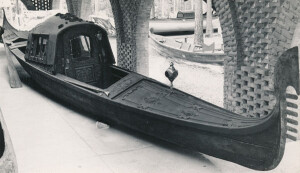 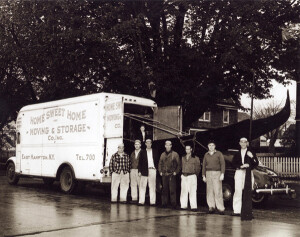 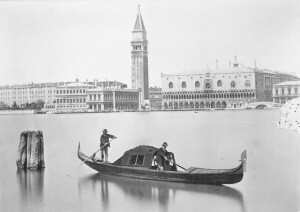 | NOTES: The gondola is one of the few watercraft in the world built to be asymmetrical. The odd shape counteracts the force of the single oar. Without the leftward curve to the prow, the gondola would tend to go around in circles. Gondolas are hand-crafted from nine woods—beech, cherry, elm, fir, larch, lime, mahogany, oak and walnut—using techniques established in 1880's. More than 280 separate pieces of wood are used in construction. Seven layers of black oil based varnish give the gondola its gloss. No other craft is so intimately associated with a city as the gondola with Venice. Historical records show that the craft dates to at least 1094, when Doge Vitale Falier assigned the community of Lorreo the task of building him a "gondulam". In the fifteenth and sixteenth centuries, the quietly elegant gondola served as a symbol of high social status. A 1562 Senate decree required that all gondolas of Venetian be painted a discreet black and carry only black draperies. By the eighteenth century, however, foreign nobles had begun paying for lavish and pretentious ornamentation for their gondolas. Gold leaf and carvings, statues and brass reliefs were commonly seen. The elaborate coat of arms and other carvings on the Museum’s gondola indicate that it originally belonged to a foreign noble family. The American Artist, Thomas Moran (1837-1926), traveled with his family to Venice in 1890. After settling into a room at the Grand Hotel, the Morans hired a gondola and gondolier to take them around the city. The family fell in love with their hired gondola, purchased it, and brought it home to the United States with them. A special wagon carried it over country roads to Moran’s East Hampton, New York, property. It was launched there on Hook Pond, and continued to inspire many of Moran’s Venetian paintings. Moran’s daughter Ruth donated the gondola to the East Hampton Free Library, which displayed it on its front lawn until 1950, when the library donated it to The Mariners’ Museum. NOTES: Thom Price visited the Museum in July 2021 and had some thoughts on the monogram on the backrest (“GY”). He said there is no letter “Y” in Italian so it’s possible the gondola was originally made for a foreign family living in Venice. He also thought the seven-pointed crown and the bird with outstretched wings wearing a five-pointed crown may signal the nobility of the family. He also suggested that the crowned-eagle was reminiscent of Austria. Unfortunately, the small arms of Italy used from 1880s onward was of similar design. VESSEL INFORMATION - BOAT TYPE: GONDOLA BOAT BUILT: MID-19TH CENTURY ORGIN: CASAL BOATYARD, VENICE, ITALIAN REPUBLIC BOAT DIMENSIONS: 36-0-0 (LENGTH OA); 4-9-0 (BEAM) | CL773 | |||||||
| 33 | No image URL. | Underground Railroad.; Antislavery movements–History–19th century. United States; Fugitive slaves–History–19th century. United States; Abolitionists–History–19th century. United States | Bound for Canaan : __the underground railroad and the war for the soul of America __Fergus M. Bordewich | LB93840 | ||||||
| 34 | 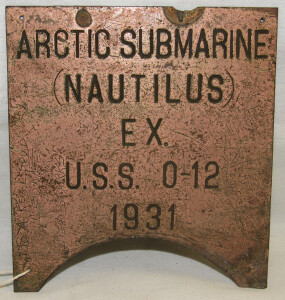 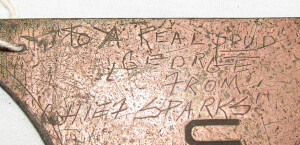 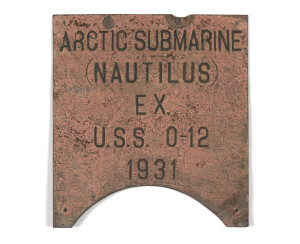 | NOTES: Photographs of crew of submarine, presented at the same time by the donor of the plate, in Mariners' Museum Library NOTES: The plate has the following name and address scratched on the back: W. J. Dean, 10 E. 13th Street, Wilmington, Del. It is only visible under extreme magnification and raking light. According to the city directories of 1928-1930 WJ Dean was a government engineer although there are several other men named William Dean in the area. It's unclear what his relationship was to the sub or its crew. The sub was refitted in Philadelphia so its possible Mr. Dean acquired the plate himself or from one of the crew. VESSEL HISTORY: USS O-12 (SS-73) was an O-class submarine of the United States Navy. Her keel was laid down on 6 March 1916 by the Lake Torpedo Boat Company in Bridgeport, Connecticut. Struck from the Naval Vessel Register on 29 July 1930, ex-O-12 transferred to the United States Shipping Board for conversion by the Philadelphia Navy Yard. She was leased at the rate of one dollar per year to Lake and Danenhower, Inc., of Bridgeport, Connecticut, for use on Sir George Hubert Wilkins and Lincoln Ellsworth's Arctic Expedition of geophysical investigation. The lease required that she either be returned to the Navy for disposal, or scuttled in at least 1,200 feet (370 m) of water. On 24 March 1931, she was re-christened Nautilus. As Prohibition prevented the use of an alcoholic beverage, she was baptised not with the traditional champagne but rather with a bucket of iced water. Simon Lake equipped Nautilus with several clever devices for under-ice operations. One was a mechanical probe, much like a trolley pole, that would scrape along the bottom of the ice cap to indicate how much clearance the submarine had below the ice. Others included drills supposedly capable of cutting through 13 feet (4 m) of ice to reach fresh air. These innovations were tested only cursorily before the boat put to sea. Nautilus with her crew of 20 men was commanded by Captain Sloan Danenhower. Nautilus, on 4 June 1931, began the crossing from New York City, United States, to Plymouth, England, the first leg of the voyage that was planned to take them up the coasts of the North Sea to Spitsbergen and conclude with a dramatic rendezvous at the North Pole with the German airship Graf Zeppelin. On that first leg, however, Nautilus encountered a violent storm. Both engines failed, leaving the boat adrift. She was rescued and towed to England by USS Wyoming (BB-32) where she was repaired. On 5 August, very late in the year to begin an Arctic expedition, Nautilus began making her way through the English Channel and along the Norwegian coast. Another storm again damaged the boat, carrying away her bridge and giving her a permanent list, but after a stop in Tromsø on 11 August, she successfully reached Spitsbergen, and Wilkins allowed but a single day for repairs. The crew carried out the planned scientific experiments as they pushed on northward, but thick pack ice hindered their progress. The boat was ill-equipped to deal with the extreme cold, lacking insulation and heaters. The fresh water system froze and the hull developed slow leaks. After ten days, Nautilus reached 82°N, the farthest north any vessel had reached under its own power, and preparations began to dive and proceed under the ice. However, the boat refused to respond; the stern planes had been carried away at some unknown earlier time. Without them, the submarine could not control its depth while submerged, and the expedition had to be aborted. On 31 August, under financial pressure from Hearst, who indicated by telegraph that Wilkins would not be paid if he did not continue, Wilkins ordered the submarine onward. Captain Danenhower ordered Nautilus trimmed down by the bow, and deliberately rammed an ice floe in an attempt to force the boat under. The manoeuvre worked in that Nautilus submerged, and became the first submarine to operate under the polar ice cap. However, her unconventional method of diving caused significant damage to her upper works. She was out of radio contact for days, was presumed lost, and rescue efforts were planned. In fact, she had actually travelled only a short distance under the ice before resurfacing through a polynya, but her radios had been badly damaged, requiring days to repair. The scientific crew continued their experiments, and their findings became the first paper published by the Woods Hole Oceanographic Institution. On 20 September, Nautilus returned to Spitsbergen carrying invaluable data and with all crew alive. Hearst, however, considered the expedition a failure and carried out his threat, refusing to pay for the expedition. Following the expedition, O-12 was returned to the Navy Department. On 30 November 1931 she was towed three miles down the Bufjorden (a Norwegian fjord outside Bergen) and scuttled in 1,138 feet (347 m) of water. In 1981 Norwegian divers found her wreck. Laid down: 6 March 1916 Launched: 29 September 1917 Commissioned: 19 October 1918 Decommissioned: 17 June 1924 Renamed: Nautilus, 24 March 1931 Struck: 29 May 1930 Fate: Scuttled, 20 November 1931 Alternate vessel names: (1) USS O-12 (SUBMARINE: 1918-1930); (2) NAUTILUS (SUBMARINE: 1931). ADDITIONAL INFORMATION: SEE: Under the North Pole: the Wilkins-Ellsworth Submarine Expedition. SEE: Papers in Physical Oceanography and Meteorology, Scientific Results of the "Nautilus" Expedition 1931, Parts I-V (Call number GC1.W8P2) | CL13432 | |||||||
| 35 | 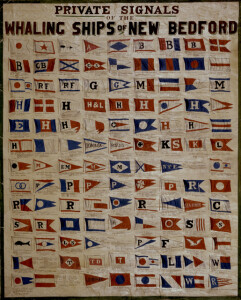 | SHORT DESCRIPTION: Oil painting on canvas by C. Newton titled 'Private Signals of the Whaling Ships of New Bedford.' There are many company/merchant flags shown with the names of their vessels and dates of operation underneath each flag. Looking at the dates of the vessels the painting appears to have been created sometime in the 1840s and received modifications as new ship's were added to each. There do not appear to be any entries made after 1869. NOTES: For information, see New Bedford Whaling Museum finding aids. Newspaper and other references found in object file. Gideon Allen and his brother, William, were whaling agents and investors from 1830 to 1887. Philip Anthony worked as a ship chandler and sold hardware at 91 Union in the 1841 New Bedford City Directory. He owned ship Menkar from at least 1845 to 1854. James Arnold was a merchant at Rotch's square. He owned the ship Cambria, which transported Frederick Douglass in 1847. George F. Barker and Abraham Barker were merchants at 117 Union in the early 1840s, also sold provisions and groceries from that address. Chapman & Bonney existed in at least the 1850s. In 1854 they purchased the schooner Union to be rigged as a brig and used in the North Atlantic whale trade. In 1859 their sail lofts burned in a fire. Coggshall should be spelled Coggeshall Cook & Snow was a partnership between Thomas Cook (1801-1890) and Loum Snow that began in 1828. They were wholesale and retail dealers in dry goods, merchant tailors, and outfitters, but also became involved in whaling trade. Snow left the partnership in 1859 and started his own company; his son joined him in 1867 to create Loum Snow & Son. Cornell & Penniman are listed in this painting as agents for bark Eliza in 1857, they were still agents for her in 1860. Oliver & George O. Crocker were brothers. In 1841 the firm of George O. Crocker & Co. had George T. Baker and Oliver Crocker as partners, and David Crocker as a laborer. They were merchants operating from 7 Commercial wharf. By 1843 the partnership between Baker, Crocker, & Co. of Boston and George O. Crocker & Co. of New Bedford had dissolved, leaving Baker to partner with Edmund Whitney to create Baker & Whitney selling sperm oil, candles, and other general commission business from their stores at 80 and 84 Water Street, which had been the address for Baker, Crocker, & Co. See The Boston Post, February 6, 1843. Elisha Dunbar & Co. was a partnership between Captain Elisha Dunbar and Edward C. Jones. Elisha Dunbar married Ann Howland in 1820, the daughter of John Howland Sr., who built them a house at 46 South Street. Edward Coffin Jones began his career as a stock boy, who worked his way up to being a ship owner and partner. When Dunbar died in 1839 Jones continued the firm alone. William Watkins worked for the company before starting his own (see below). John P. Knowles worked as a partner with T. & J.P. Knowles with Thomas. By 1887 The Boston Globe reported that John P. Knowles 2d was a ship merchant who was in debt. In 1890 the newspapers reported him as an insolvent debtor paying 40 per cent dividend. T. Knowles & Co.: Thomas Knowles worked with John P. Knowles and Joseph Knowles in th 1849 directory as dealers in groceries, provisions, dry goods, etc. at 24 Union. Jos Dunbar & Co. was Joseph Dunbar, a mercantile and whaling agent company. Henry F. Thomas (born 1824) worked for his father then joined Dunbar as a clerk and worked his way up to being a partner in 1845. He took control from 1850 to 1875. The company is listed in the 1836 and 1841 directories located at 9 Middle with Asa T. Lawton as a partner. Rodney French (1802-1886) was a quaker and merchant. He was an abolitionist who supported the Civil War. He won the 1853 mayoral election for New Bedford and a street in New Bedford is named Rodney French Blvd in his honor. William Gifford was a whaling agent for the ships Charles Drew, Minerva, and bark William Gifford. His son, Charles H. Gifford, became a partner and the company name became William Gifford & Son. William died in 1866 and Charles continued the company for a few years. Lawrence Grinnell was a whaling agent who began his career in the counting room of Fish & Grinnell in New York (which later became Grinnell & Minturn, see QO 1030 and QO 1024). He returned to New Bedford to work as a whaling agent, sold sperm oil and candles, and worked with the Mutual Life Insurance Company of New York. Hathaway & Luce was a partnership between William Hathaway Jr. (1798-1885) and Matthew Luce (circa 1802-1852) in 1838. Hathaway was a sailor who became master, and was well traveled. When he partnered with Luce they worked as agents and commission merchants until Luce died in 1852. Hathaway continued the company until the Civil War when he sold several ships and had a few captured by the Confederates. T.S. & F.S. Hathaway was Thomas Schuyler Hathaway (1796-1821) and Francis S. Hathaway (1803-1869). Their father, Humphrey Hathaway (1765-1821) was a ship builder and involved in the whale oil industry. A third brother, Nathaniel, was also a partner until his death in 1836; two of his sons became partners later in life. A.H. Howland was Abner Howland, whose family was very active in the New Bedford whaling industry and also very wealthy. He is a nephew of John Howland Sr., and Abner's home still stands at 22 South Sixth Street. Edward Wing Howland was a whaling agent, owner, and also outfitted whaling vessels in partnership with his brother, Cornelius, and his nephew, George Howland Barney. Edward died in 1879. George & Matthew Howland: George Howland Sr., was a whaling agent who eventually owned nine whaling vessels, a counting house, a wharf, a candle factory, stores, houses, and land. His daughter used his home at 245 Walnut Street to educate fugitive slaves. The home was built as a wedding gift in 1811, and on the wedding day George and his wife Susan watched the launch of the ship George & Susan from their front porch. Frederick Douglass worked for him as a young man. Lemuel Killock & Son should be spelled Lemuel Kollock. He was a ship chandler and grocer in the 1841 city directory, at 3 Whaleman's slip at the corner of Central wharf. Issac Howland Jr. & Co. should be Isaac Howland Jr. & Co. His father, Isaac Howland Sr., began a company where Jr. worked until it failed, but he managed to stay involved in the industry and start his own company. Isaac Jr.'s daughter, Abby Howland, married Edward Mott "Black Hawk" Robinson in 1833 and he took control of the company when Isaac Jr. died in 1834. Robinson was known for his ruthless business tactics and grew the company into a strong, successful venture that made them very wealthy. His daughter, Hetty Green, learned the finances from her father and became the wealthiest woman in America when she died in 1916. Green was known for her stingy financial practices, neglecting medical care for herself and her children to save money. Her son wound up with an amputated leg. John & James Howland were brothers. James started his career at sea but barely survived several dangerous voyages so he retired to life on shore to work with John. James built a house between 1808 and 1815 at 21 South Sixth Street that still stands, but at one time had an observation tower in the yard so that he could still watch the harbor. Charles Waln Morgan lived from 1796 to 1861. He partnered with William Rotch Sr. and Samuel Rodman Sr. as merchant shippers, then worked for himself from 1819 until his death. He owned all or part of numerous whaling vessels.. T. & A.R. Nye were Asa R. Nye and Thomas Nye, Jr. They were merchants at 8 Middle Street in the 1836 and 1841 city directories. Frederick Parker lived from 1806 to 1861, son and partner of prominent whaling merchant John Avery Parker. John hired William Phillips in 1825 and his son, George R. Phillips, in 1848. John died in 1853 and Frederick continued the company. When Frederick died William and George continued the company under the name of William Phillips & Son (incorrectly spelled twice in painting as Philips). Jireh Perry was a merchant with a counting room at 11 Middle Street in the 1841 directory. Ebenezer Perry appears in the record as his son, and Pardon Tillinghast was a partner. Lorenzo Peirce was a cooper who eventually owned 3/4 of the bark Addison from 1860-1867. Pope & Morgan: Samuel Griffitts Morgan was the nephew of Charles W. Morgan and worked as a clerk for his uncle until partnering with William G.E. Pope in about 1836. The 1841 city directory has Pope & Morgan as commission merchants and dealers in duck, iron, etc. in Rotch's Square. Andrew H. Potter was a clerk for the Register Office in 1841. By 1861 the New York Times reported that he worked for A.H. Potter & Co. and was arrested for his part in outfitting the ship Brutus for carrying slaves. Chas. S. Randle may be Charles S. Randall, who went on to be a politician. Thomas Riddell partnered with Thomas R. Dix as merchants with a counting room at 29 Rotch's Square. Barton Ricketson was partnered with Charles Wood, merchants at 31 Centre in 1841. Samuel W. Rodman was a leading manufacturer of cotton goods. The 1841 directory has his office at 3 Rodman, by 1842 he built a large house with a guest house at what is now 35 Seventh Street. The Rodman family had been involved in the whaling industry since 1798 when Samuel Rodman Sr. started working as a merchant, banker, an invested in textile mills. His sons were Samuel Rodman Jr. and Benjamin Rodman. Samuel Jr's son, Thomas Rotch Rodman, also worked for the company. Thomas worked in his father's whaling ventures, then fought in the Civil War before working for the Wamsutta Mill that his father and uncle funded. William Rotch Rodman lived at 388 County Street, built between 1833 and 1836. The Rotch family was another prominent, highly successful whaling family in New Bedford. It began with William Rotch Jr. in 1787, who had worked for his father's counting house in Nantucket. He taught his sons, William Rodman Rotch, Joseph Rotch, and Thomas Rotch, who all worked as whaling agents. Joseph's son, William James Rotch, attended Harvard, founded the New Bedford Cordage Company with his brother, and became mayor. William James married two of Charles W. Morgan's daughters. O. & E.W. Seabury were Otis and Edward W. Seabury, outfitters and agents for whaling ships. Several brothers were also involved in the whaling industry and occasionally contributed to the business. They were Humphrey W., Charles Pinkney, William Harrison, and Jason. Swift & Allan should be spelled Swift & Allen. They were ship chandlers, agents, and commission merchants from 1842 to 1891. Frederick Slocum Allen had worked with Thomas C. Lothrop from 1832 to 1836, then with Ireneus Gooding from 1836 to 1841. He then partnered with his brother-in-law, Jireh Swift, to create Swift & Allen. Their decline began with the Civil War and the company closed for good in 1891. W.C.N. Swift & Eben Perry were William Cole Nye Swift and Eben Perry. The partnership began in 1849, they hired William H. Aiken in 1865, and they hired Frederick Swift (W.C.N.'s son) in 1875. Aiken and Frederick Swift took over control in 1879 and the name became Aiken & Swift, which eventually moved operations to San Francisco by the 1880s. Aiken died in 1893 but Frederick Swift continued working. Oben N. Swift should be spelled Obed N. Swift. He worked with W.C.N. Swift (see above) as live oak contractors at 56 Fifth Street in 1841, prior to W.C.N.'s partnership with Eben Perry. The Taber family is another with long connections to the New Bedford whaling industry. Henry Taber went to sea in 1809 and by 1832 was working as a ship chandler and grocer as Henry Taber & Co. He partnered with David Sherman, then with his son, William Gordon Taber, then with his son-in-law John Hunt. When Henry Taber retired in 1866, William G. Taber and William Gordon Jr. took over and changed the name to Taber, Gordon & Co. Other family members involved in the whaling industry include Henry Taber's cousins, Francis Taber and George Russell Taber, who operated as F. & G.R. Taber, as well as Francis' son, Robert Holloway Taber. Thomas & Dow was a partnership between Sylvanus Thomas and William F. Dow, which had financial difficulties in 1846. Dow also worked as principal of the William Street Boys' School, and Thomas worked with Zephaniah Eddy as Eddy & Thomas in at least 1841. Thomas later created Sylvanus Thomas & Co., and hired George S. Homer in 1859. Homer became a partner by 1867 and partnered with his brother, Frederick, after Thomas died. The company existed into the 1870s. West & Paine started in 1816 by John P. West. It became West & Paine when Samuel S. Paine joined, then S.S. Paine until 1861 when Paine's brother, George Paine, joined and the name changed to S.S. Paine & Bro. They were dealers in brick and lime at 12 Hazard's wharf. John P. West's son, Simeon N. West, was also a whaling agent. W. & G.D. Watkins started in 1840. William Watkins had worked for Elisha Dunbar until that company closed and he started his own. It became William & George D. Watkins from 1851 to 1862. In 1878 George bought the company and partnered with Jonathan Handy to create Watkins & Handy. Tucker & Cummings was a partnership between Charles Smith Cummings and his brother-in-law, Abner R. Tucker in 1853. When Tucker left the company in 1881 Benjamin Cummings joined and the name became C.S. & B. Cummings. Benjamin Cummings also worked with his brother-in-law, Charles H. Gifford, in Gifford & Cummings. Charles Smith Cummings had learned the business from his father and two uncles who were part of William Cummings & Co. Wood & Nye: Willard Nye (1811-1865) started his career with David R. Greene & Co. and was a partner with them by 1836 with Dennis Wood. By 1850 Wood and Nye created their own company as merchants and agents. Nye died in 1865 but Wood continued the company after that. Nye also served as a Representiative twice and Mayor of New Bedford. (See A Genaeology of the Nye Family) | CL12616 |
Created 2026 by Don Barker, CBMM volunteer, for the Chesapeake Shipbuilding Project. shipbuilding@sailingworkboats.es